Pablo Escobar rose from small-time crime in Medellín to become the most powerful drug trafficker in history. At his peak, he controlled a vast cocaine network, accumulated wealth on an almost unmanageable scale, and openly challenged the Colombian state. His life ended in 1993 when he was shot dead on a rooftop while attempting to evade capture.
What followed his death was not triumph or legacy, but fragmentation, fear, and lasting damage.
Early life and beginnings
Born in 1949 in Rionegro, Colombia, and raised in Medellín, Pablo Escobar came from modest circumstances. His early criminal activity had little to do with drugs — forged documents, small-scale smuggling, and car theft were his entry points.
What distinguished Escobar early on wasn’t strategy or sophistication, but a willingness to escalate when others hesitated. Violence wasn’t a last resort — it was a tool.
By the late 1970s, as cocaine demand surged in the United States, Escobar positioned himself at the centre of a growing trade.
The Medellín Cartel and unimaginable wealth
Escobar became the public face of the Medellín Cartel, which at its height controlled a majority share of the global cocaine market.
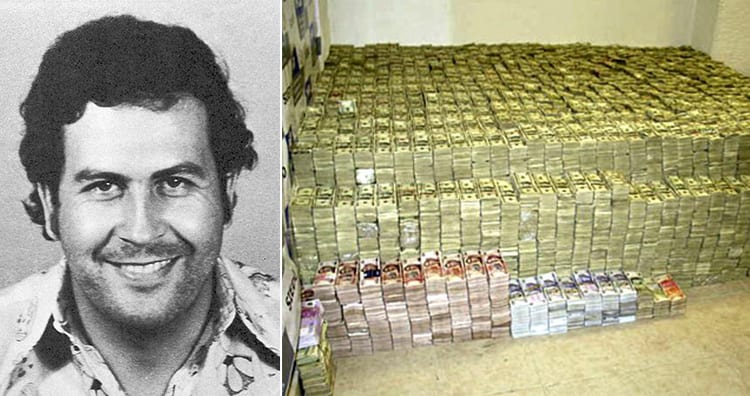
The scale of money involved defied normal logic. Cash was stored in warehouses, buried underground, or hidden in walls. Large sums were routinely lost to mould, fire, and rodents.
One often-reported detail — verified by multiple sources — is that Escobar allegedly spent around £32,000 per month on elastic bands just to bundle cash. This wasn’t excess for show; it was necessity created by volume.
At this level, wealth stopped being about lifestyle and became a logistical problem.
Power, fear, and “plata o plomo”
On January 30, 1993, Bogotá was bombed by the Medellin Cartel on the order of Pablo Escobar
Escobar’s influence relied on a brutal simplicity: plata o plomo — silver or lead.
Officials were bribed or killed. Judges, police officers, journalists, politicians — many complied, many didn’t survive. Car bombings, assassinations, and public attacks became part of daily life in Colombia during the height of his power.
This wasn’t hidden criminality. It was open conflict.
Public image and contradiction
Despite his violence, Escobar cultivated an image as a benefactor in poor areas of Medellín. He funded housing projects, football pitches, and community initiatives.
To some locals, he was seen as a provider. To the state, he was a terrorist. Both views existed simultaneously — and that contradiction is central to understanding why his story still resonates.
These gestures did not offset the damage he caused, but they complicated how he was perceived.
Pressure, isolation, and decline
As Colombian and US authorities intensified efforts against the cartel, Escobar’s position weakened.
He was eventually imprisoned — in a facility built largely to his own specifications. When that arrangement collapsed, he escaped, triggering one of the largest manhunts in modern history.
Former allies turned away. Protection eroded. Surveillance tightened. The network that once shielded him became a liability.
Power built on fear proved fragile once the fear shifted direction.
Death on the rooftop
In December 1993, Escobar was located in Medellín.
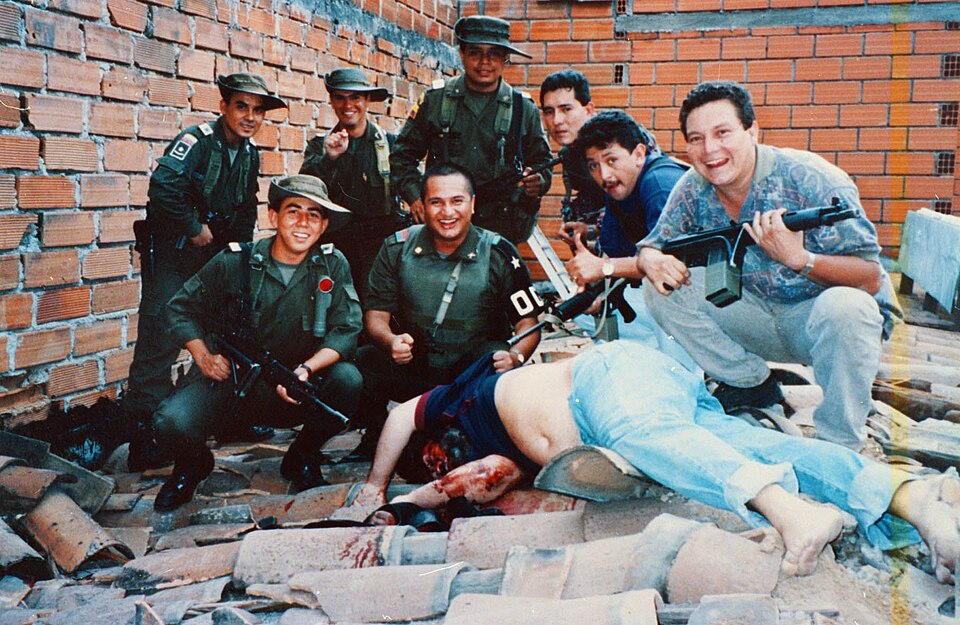
Attempting to flee across rooftops, he was shot and killed during the escape. He was 44 years old.
There was no negotiation, no exile, no quiet disappearance. The end came suddenly, publicly, and without ceremony.
Aftermath and reality
Escobar’s death did not end the drug trade, but it did end his myth.
His organisation fractured. Violence continued. Colombia was left to deal with the long-term consequences of years of corruption, trauma, and instability.
For all the money, influence, and notoriety, the outcome was bleak: fear, loss, and a life that collapsed under its own weight.
Why his story still matters
Pablo Escobar’s story is often retold not because it is admirable, but because it is extreme.
It shows what happens when power, money, and violence reinforce each other without limits — and how quickly that structure can implode.
Strip away the myth, and what remains isn’t a kingpin, but a warning.
You’re chatting with someone about something completely random — trainers, holidays, a new kettle — and later that same day, an advert for it pops up on your phone.
At that point, almost everyone thinks the same thing:
Is my phone listening to me?
It feels intrusive. A bit creepy. And not entirely unbelievable.
At first glance, it really does seem like your phone must be picking up your conversations. The timing feels too perfect to be a coincidence. You mention something out loud, and suddenly it’s staring back at you on a screen.
But here’s the less dramatic — and slightly more unsettling — explanation.
Most of the time, your phone doesn’t need to listen to you.
Long before you ever said anything out loud, your behaviour had already been leaving clues.
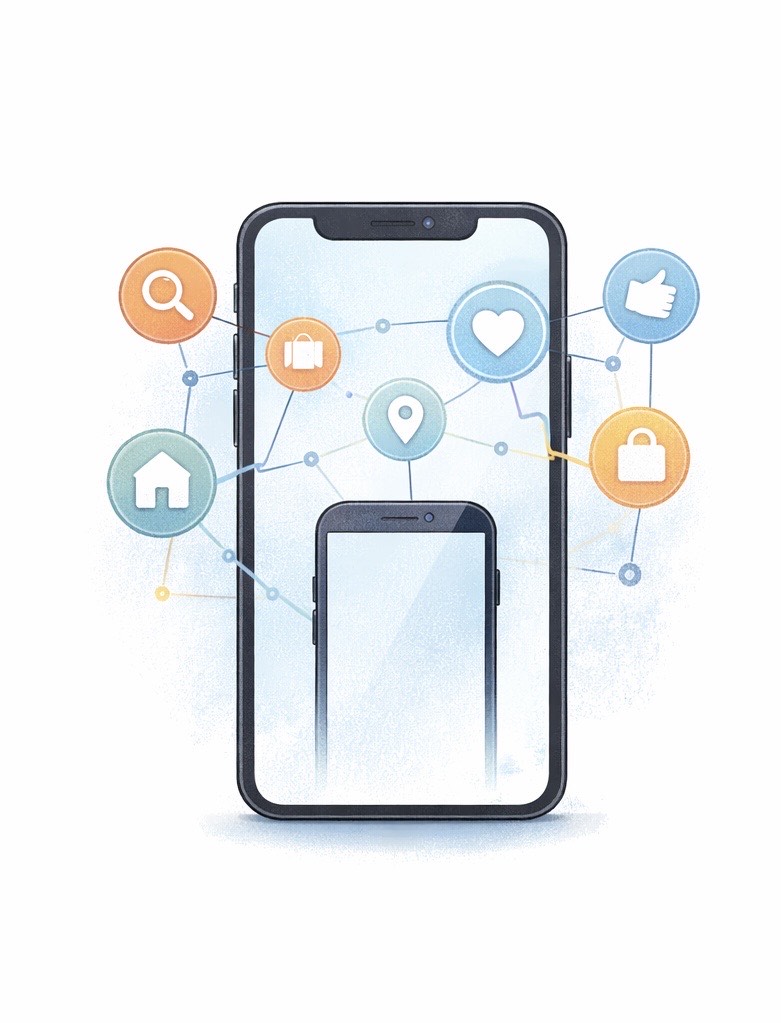
Apps and websites track what you search for, what you click on, what you pause on, what you like, where you go, and even what other people around you are interested in. All of that data builds a surprisingly accurate picture of what you’re likely to think about next.
So when you finally do talk about something, the advert doesn’t feel predictive — it feels reactive.
In reality, the prediction often came first. The conversation just makes you notice it.
This is where it starts to feel uncomfortable.
Your phone isn’t “listening” in the way people imagine, but it is extremely good at connecting dots. It knows your habits, your routines, your interests, and your patterns — and those patterns are far more predictable than most of us like to admit.
To be clear, phones do have microphones, and apps do request permission to use them. There have also been real cases of companies abusing access they shouldn’t have had. So people aren’t foolish for being suspicious.
But in most everyday situations, what’s really happening isn’t spying — it’s probability.
Your phone isn’t secretly listening to your conversations.
It’s just very good at guessing what you’re going to care about next.
And depending on how you look at it, that might be even stranger.
Another one of those modern moments where the technology isn’t quite as clever — or as innocent — as we’d like to believe.
You can smash sit-ups all day long, but if your diet’s all over the place, your abs aren’t coming out. Simple as that.
Training helps build the muscle, but nutrition is what strips the fat off and actually lets you see it. Too many people overcomplicate it with mad routines and forget the basics — what you eat matters more than how many crunches you do.
Get the food right, stay consistent, and the gym work finally starts to show.
Sometimes the simplest truth is the one people don’t want to hear.
If you’ve ever had a nosebleed, chances are someone told you to lean your head back.
Turns out that’s exactly what you shouldn’t do.
Came across this on Art of Manliness and, while I wouldn’t normally think twice about nosebleeds, this is one of those everyday things most people get wrong. Simple, practical, and actually useful to know — especially if you’ve ever ended up swallowing blood like a mug.
British: a man with whom you are friendly :fellow, chap
They can’t treat us like that, can they, lads?!
He was out drinking with the lads [=(US) the guys, the boys] at the pub.
◊ In British English, a man who is a bit of a lad does things that are considered a bit wild, such as getting drunk and having sexual relations with many women.
We all love a toastie. Crispy bread, melted cheese, whatever filling you fancy. That’s never been the issue.
The issue starts the moment the sandwich comes out.
Cheese leaks. It always does. It burns onto the hot plates. Corners are awkward. You’re told not to get water near it. You can’t put it in the sink. You definitely can’t put it in the dishwasher.
So you scrape at it.
You wipe it while it’s still warm.
You burn your fingers. Maybe your wrist. Possibly your forearm if you’re really committed.
You tell yourself you’ll clean it properly later.
And next time you fancy a toastie, a small part of your brain goes, “Is it worth the hassle?”
That’s the problem. Not the food — the clean-up. When something feels like a chore (and a minor health risk), you stop enjoying it.
What you might not have realised is that this has quietly been fixed.
There are now toasted sandwich makers with removable plates. Plates you lift out. Plates you can put straight in the sink. Plates you can throw in the dishwasher and forget about.
And that changes everything.
You make your sandwiches. You enjoy them. When you’re done, you pop the plates out, give them a rinse or drop them in the dishwasher, and that’s it.
No scraping.
No hovering hands over hot metal.
No accidental first-degree burns in the name of melted cheese.
Bosh. All done. Sorted.
Instead of thinking about the mess, you’re back on the sofa, watching TV, or getting on with your evening like nothing happened.
There are some things you don’t realise you need until the moment you really need them.
The phonetic alphabet is one of those things.
If you have ever had to spell your name, an email address, a postcode, or a reference number over the phone and had to repeat yourself several times, you already understand the problem.
This is a simple, practical reference that makes everyday communication easier.
WHAT IS THE PHONETIC ALPHABET
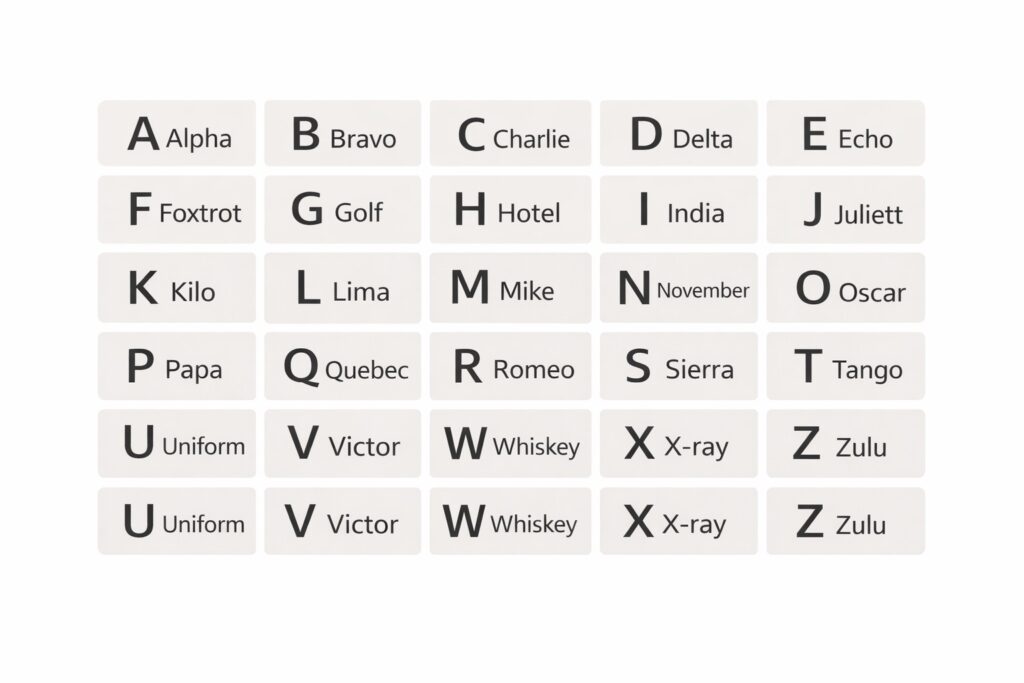
The phonetic alphabet, often referred to as the NATO phonetic alphabet, is a standard way of spelling words using clearly recognisable words for each letter.
Instead of trying to explain letters that sound similar, each letter has its own word.
For example, A becomes Alpha, B becomes Bravo, and C becomes Charlie.
This removes confusion almost instantly.
WHERE IT IS ACTUALLY USED
The phonetic alphabet is not just a military thing.
People use it every day when dealing with banks, utilities, customer support, work calls, admin, email addresses, postcodes, and reference numbers.
Anywhere clarity matters, it becomes useful very quickly.
WHY A PHYSICAL REFERENCE CARD HELPS
Yes, you can look the phonetic alphabet up online.
But when you actually need it, you are usually already on a phone call, already trying to be quick, or already slightly flustered.
A small reference card sitting on a desk, pinned nearby, or kept in a drawer means you do not need to search, scroll, or think.
You simply glance at it and carry on.
WHAT IS ON THE CARD
The card contains the full A to Z phonetic alphabet laid out clearly and cleanly.
There is no clutter and no unnecessary information.
It is designed to be glanced at, not studied, and to be useful rather than clever.
WHO THIS IS USEFUL FOR
This is useful for anyone who regularly deals with phone calls or admin.
It is useful for anyone who has ever been misunderstood when spelling something out.
And it is useful for anyone who prefers simple, physical solutions rather than relying on apps or constant searching.
In practice, that includes most people.
FINAL THOUGHT
This will not change your life.
But it will quietly remove one small, annoying friction point, and those small improvements add up over time.