Just How Many Versions of A Christmas Carol Have Been Made?

How many times can one Christmas story be retold?
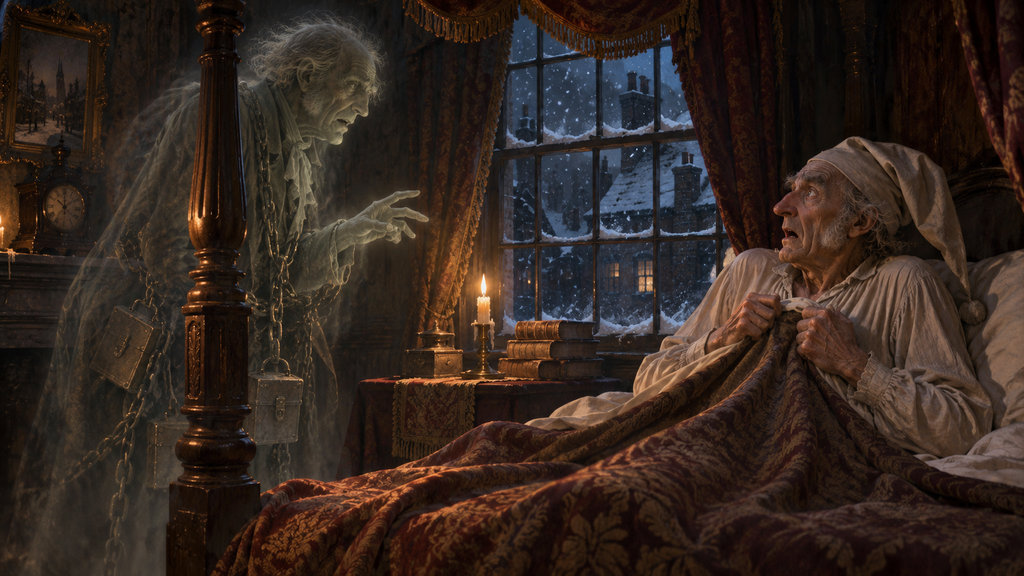
Ebenezer Scrooge sits up in bed, frightened, as the ghost of Jacob Marley appears beside his bed in a snowy Victorian night.

Charles Dickens wrote A Christmas Carol in 1843, completing it in just six weeks. Published on 19 December that year, the story introduced readers to Ebenezer Scrooge: a miser whose Christmas Eve is transformed by visits from the spirits of Christmas Past, Present and Yet to Come.

The story caught people’s imagination almost immediately. It has been adapted for the stage, film and television, and the British Film Institute says there have been more than 400 screen adaptations worldwide. There isn’t one simple count that covers every film, television production, animation, parody and modern retelling, so we’re not trying to pin down an exact total.

Instead, we’re going to look at some of the best-known and most interesting versions: who played Scrooge, how each adaptation told the story, and how audiences received it. We’ll keep adding to this list as we explore more of them.

From early silent films to much-loved Christmas favourites and newer takes on Dickens’s tale, there’s a lot to discover. Let’s start with the versions that have stayed with us.
A Christmas Carol: Quite Possibly the Best Christmas Story Ever

Few Christmas stories have captured people’s imaginations quite like A Christmas Carol. But how did Dickens’s tale of Scrooge and the three spirits begin?

The Story of A Christmas Carol: How It Began

By the autumn of 1843, Charles Dickens was 31 and already one of Britain’s most successful writers. But his latest novel, Martin Chuzzlewit, wasn’t selling as well as his publishers had hoped. His salary was under threat, his wife was expecting their fifth child, and Dickens was even considering moving the family to Italy, where their money might go further.

He turned his attention to a short Christmas story. Dickens wrote A Christmas Carol in about six weeks and believed it could do well. He was short of money, and just after finishing it he asked a friend for a £200 loan against the book’s expected earnings.

The book arrived in shops on 19 December 1843. Its first print run of 6,000 copies had sold out by Christmas Eve. Readers had taken to it immediately, but the beautifully illustrated book was expensive to produce. Dickens had hoped to clear about £1,000. The first printing brought him roughly £230, and sales of nearly 15,000 copies by the end of the following year brought his total profit to about £726.

A Christmas Carol was a success with readers, but it did not provide the immediate financial rescue Dickens had hoped for. Its popularity continued to grow. Dickens performed it himself to packed crowds, and it became the best known of his Christmas books.

The book’s popularity also brought piracy and a costly court fight. Dickens won his case, but the pirate publisher went bankrupt, leaving Dickens with legal costs of about £700.

Since then, A Christmas Carol has been retold in countless books, films and television programmes, and adapted for stage and radio. Scrooge and the three spirits have become familiar to generations of readers and viewers. More than 180 years after its first publication, the story is still being revisited and enjoyed every Christmas.