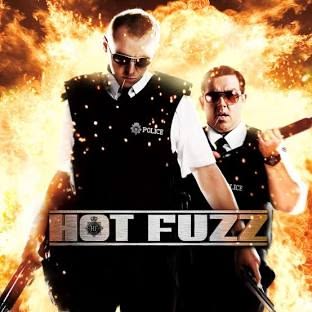
But if it somehow slipped past you at the time — or you’ve only ever half-watched it — it’s well worth sitting down and giving it a proper go.
On the surface, it looks like a daft action comedy. Underneath that, it’s a surprisingly sharp film that rewards repeat viewing more than most.
Why it still holds up
At its core, Hot Fuzz is a buddy cop film, but it doesn’t just parody the genre — it genuinely understands it. The action scenes are over-the-top on purpose, the dialogue is packed with throwaway lines, and nearly every joke pays off later in the film if you’re paying attention.
It’s also one of those rare films that gets better the more times you watch it. Once you know where it’s going, you start spotting all the little setups, callbacks, and background gags that you’d completely miss the first time round.
The pacing helps as well. It starts off fairly grounded, then slowly ramps up the absurdity until it’s gone completely off the rails — but somehow still makes sense within its own logic.
The Lads Room verdict
This is an easy watch in the best possible way.
It’s funny without trying too hard, violent without being grim, and clever without disappearing up its own backside. You can stick it on casually, or actually sit and watch it properly — it works either way.
If you like films that are:
Highly rewatchable
Packed with quotable lines
Silly on the surface but well put together underneath
…this one deserves its place in your rotation.
The Lads Room Rating: Pretty f***ing good
A few things you might not know
If you’ve already watched Hot Fuzz, here are a few extra details that add a bit more appreciation on a rewatch:
Although the film is set in the fictional village of Sandford, it was largely filmed in Somerset, with several real villages used for exterior shots.
Many of the action scenes deliberately mimic classic Hollywood cop films, right down to camera angles and editing styles — it’s parody, but very intentional parody.
A lot of the jokes and lines that seem like throwaway gags early on are actually setups for much later payoffs.
The village itself was designed to feel almost too perfect, which helps sell the slow reveal as things start getting stranger.
Some scenes that look chaotic and improvised were actually tightly choreographed, especially during the action-heavy final act.
Cate Blanchett makes a brief, masked appearance as Nicholas Angel’s ex-girlfriend — which is why most people never realise it’s her.
Part of our ongoing “Classics You Might Have Missed” picks.
I taught at TOPGUN, and the flying and dogfighting seen in the ‘Top Gun’ movies are pretty darn realistic
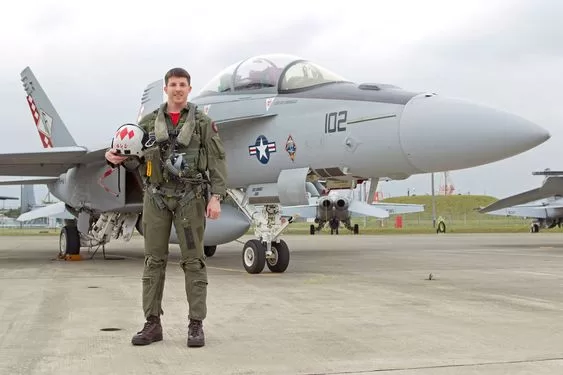
This as-told-to essay is based on a conversation with Guy Snodgrass, a former TOPGUN instructor and retired naval aviator who was also Communications Director and Chief Speechwriter for Secretary of Defense James Mattis. It’s been edited for length and clarity.
With the original “Top Gun” film from 1986 and 2022’s “Maverick” sequel, Hollywood and the producers did a phenomenal job. They worked in collaboration with the United States Navy, and all the flight scenes you see in both movies are pretty darn realistic.
When the pilots were ripping through canyons in “Maverick” to practice low-level flying and then popping up to release ordnance on target, all of those are things that we would train to do and would do in similar circumstances. Of course, everything else has quite a bit of Hollywood magic sprinkled on it. You don’t typically have a lot of love interests going on at TOPGUN. You’re not out on the beach playing football.
There are also a lot of liberties taken with the scenes of fights breaking out, too, like people getting in each other’s faces and yelling and screaming. There’s just not a lot of room for that in today’s military; it’s a very professional environment. There are disagreements, but you work through it as professionals.
As for which film is better at capturing TOPGUN, I suspect it would be a generational question. If you ask someone who was flying in the 1970s and 1980s, they might say the original is better because that was their time. Plus, the original has the F-14 Tomcat, and there’s a lot of nostalgia for that jet.
The second movie was great with the flight scenes, the camaraderie, and how they approached the mission. There’s still that Hollywood magic, like Capt. Pete “Maverick” Mitchell, who has been around for decades, being able to fly an F-14 against a Russian fifth-generation fighter and prevail. On that level, a fifth-generation fighter like Russia’s Su-57 is going to smoke the F-14 every single day and twice on Sunday.
But the person in the cockpit is the key element, and that’s what we really focus on at TOPGUN.
Becoming a TOPGUN instructor
Snodgrass said the application process is fairly straightforward but highly selective. Guy Snodgrass I think in a lot of cases throughout my career, I was always attracted to trying to do the toughest things. And one of the pathways I could take after my time as a Navy fighter pilot was to go through TOPGUN.
That’s the path I wanted to pursue, so I could try and reach that pinnacle of fighter pilots in naval aviation.
But the most demanding part of being a TOPGUN instructor for me wasn’t the actual flying, like you see in “Top Gun” and “Top Gun: Maverick,” but the lecture process as an instructor.
Getting into TOPGUN is fairly straightforward. You’ve accumulated a body of work over your time in a flight squadron. You put in your application, you get letters of recommendations from pilots you’ve actively flown with, and typically your commanding officer from your unit will provide an independent evaluation.
Related stories
When I was an instructor, I saw the other side of this. Once you have all the applications, maybe 30 people for eight spots, there’s this cascade — we call it the waterfall — in how people get chosen. You go through all 30 individuals and determine who are the few, usually maybe four or five, that we want to stay as instructors. The remainder of the pool can now be picked by other schools, so it kind of cascades down from TOPGUN.
In my case, I was selected to be an instructor. I went through the course, which today takes about 12 weeks, and at the conclusion of that, I was selected.
A day in the life at TOPGUN
The daily schedule is hectic, but debriefs after flights are the best time to learn and grow. Guy Snodgrass You’re typically an instructor at TOPGUN for two-and-a-half, maybe three years. You’re flying every single day, Monday through Friday, and in many cases, twice a day. We’d get up early, around 4:30am, for our first brief at base around 5:30am to 6:00am. You have some time to relax, grab your gear, get into the cockpit, and then there’s a 30-minute period to get the jet started and get all the systems online and ready for take off.
Depending on how dynamic your mission is — meaning how aggressive and fast you’re flying — you’ll likely be airborne for about an hour, doing basic flight maneuvers and the dogfighting you see in the “Top Gun” movies. A longer flying mission might be about an hour and a half.
You might be dogfighting against an instructor or using the gun on the plane to strafe the target on the ground or drop bombs from high or low altitude, putting what you learn in the classroom towards practical application.
Then you’re becoming an expert in air-to-ground delivery and doing multiplane exercises, flying with one other plane to start and then you extend outwards with three other planes for pretty involved missions, dodging simulated surface-to-air missiles, fighting your way in and dropping weapons, then fighting your way out.
Back on the ground, you get out of your gear, get some downtime, and then start the debrief. The debriefs are epic because they typically last anywhere from three-and-a-half to five hours.
These sessions can go for a very long time because you’re learning lessons from what you just flew. We would always say that the debrief is the most important because that’s where you’re learning your lessons and able to call them out in a real, tangible way so that you can apply them moving forward.
After debrief, you’ll probably have an hour break and then do another flight and repeat the cycle. You typically head home around 10:00 pm, maybe 10:30 pm.
What they don’t show in the movies
Both “Top Gun” movies have their Hollywood magic, but they’re surprisingly realistic. Guy Snodgrass As an instructor, you go through the entirety of the process, and after everyone else finishes training and graduates, you stay and become a subject matter expert for some element of teachings at TOPGUN. Mine was air-to-air mission planning, so being in charge of long-range aerial combat.
Then you have six months to prepare, study, and practice to give this lecture on your area. You get eight practice lessons to receive feedback. In my case, it was a four-and-a-half hour long lecture, hundreds of presentation slides, and it had to be completely from memory. They don’t let you look at your slides, and you can’t use notes.
That’s the biggest thing, the most demanding part for me wasn’t the actual flying, but the lecture process and being able to do it completely from memory. But once I passed that, I was a fully qualified instructor and continued to learn and instruct throughout the remainder of my time. Teaching and leading your subject matter area lecture is the most difficult part, Snodgrass said. Guy Snodgrass The most rewarding part of being a TOPGUN instructor was the personal relationships you form with the people around you, who are also dedicated to trying to achieve their best potential. There’s a competitive air because everyone wants to try to be the best, but mostly there’s camaraderie.
I also got to meet these students as they came through, interacting with the future of naval aviation, future leaders who are going to continue to grow for the remainder of their career and assume positions of greater authority. As an instructor, you’re having a real direct influence and ability there.
The movie Morgan Freeman “begged” Clint Eastwood to direct
Thomas Leatham@leafcine
Mon 26 February 2024 16:15, UK
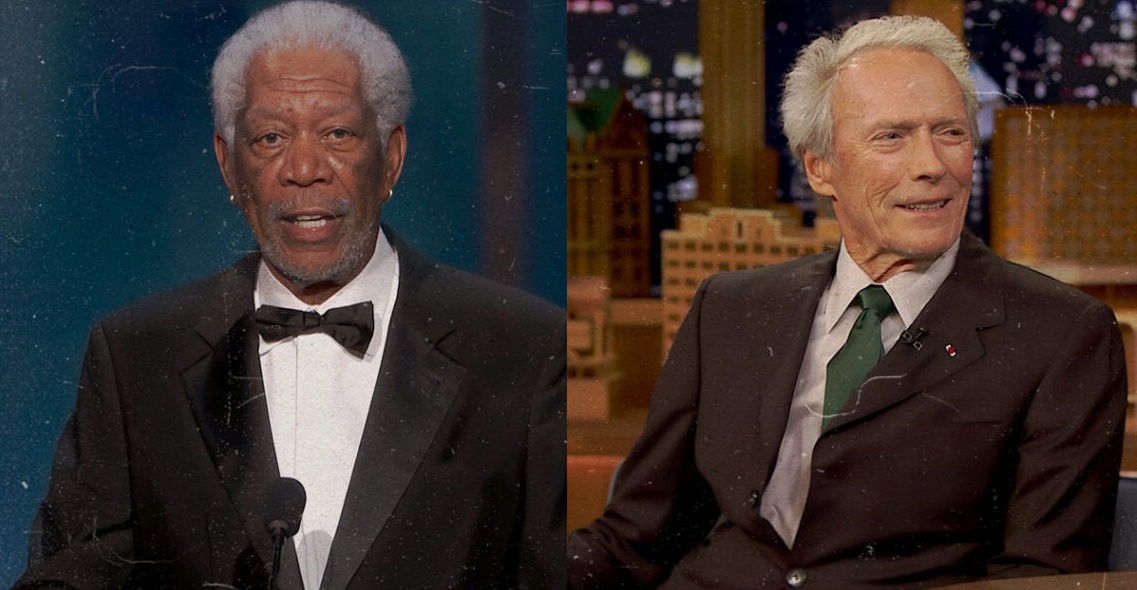
There’s a deep mutual respect and admiration that runs through the friendship and creative partnership of Morgan Freeman and Clint Eastwood. Both figures have established themselves as true icons of American cinema, though Eastwood’s history in the film industry goes further back.
With a profound understanding of one another’s craft, Eastwood and Freeman have collaborated on a handful of occasions. In fact, in a number of Eastwood’s later movies as a director, he’s cast Freeman, beginning with 1992’s revisionist western Unforgiven, which is certainly one of his best.
Twelve years later, Freeman again turned up in Eastwood’s Million Dollar Baby, proving their professional connection. By the time Freeman gave his third performance for Eastwood, he actually had to convince the director to take on the project. Freeman explained this incident whilst also giving praise to Eastwood’s prowess behind the camera.
“I think Clint is an actor’s director,” Freeman once told RTE. “He doesn’t direct actors. He directs movies. He hires actors, and it’s your job. And I love that about him that you establish your own character; you play it and do what the scene calls for. [He’ll] have the scene set up.”
“Cameras will be where we want them to be,” Freeman added. “Lights will be where we want them to be. And go for it. “He never says action, and he never says cut. He’s his own person on a movie set. Wonderful.” Perhaps this sense of acting freedom on Eastwood’s sets comes from his own history as an actor and his understanding of their needs.
Eastwood is also largely known for directing projects that he himself stars in, but there’s one film from his catalogue that Freeman actually played a large hand in getting the director to take on. “I begged him to direct Invictus,” Freeman noted. “It’s one of the few movies he directed that he wasn’t in.”
Eastwood’s 2009 biographical sports film Invictus sees Freeman play Nelson Mandela and focus on how he used the 1995 Rugby World Cup to bring together the nation of South Africa following years of racial tension and apartheid. Matt Damon plays Francois Pienaar, the Springboks’ captain, who tries to lead his team to victory.
Freeman and Eastwood had already worked twice together before Invictus – Unforgiven in 1992 and Million Dollar Baby in 2004 – but it was perhaps the biographical sports drama for which Freeman earned the most acclaim, including a ‘Best Actor’ nomination at the Academy Awards.
Today’s clip is from the classic, Sexy Beast which is probably one of the most underrated films with great performances from Ben Kingsley, Ian Mcshane and Ray Winstone. It’s one of those films with only a few locations but some very entertaining dialogue.
We start off with the scenes with Ben Kingsley and Ray Winstone. In the first scene we have Kingsley’s character Don Logan trying to convince Winstone’s character Gary ‘Gal’ Dove to come out of retirement and do one last job.
He has been in classics such as The Football Factory, Lock Stock & Two Smoking Barrels, Rise of the Foot Soldier, to name a few over a career spanning over 35 years. Frank Harper talks about how he first got into acting, his first acting jobs, films that influenced his career, the fights in The Football Factory, how he took Denzel Washington to The Old Den at Millwall to watch them play Leeds, what it was like to play convicted murderer Jack Whomes, his directing career and more.
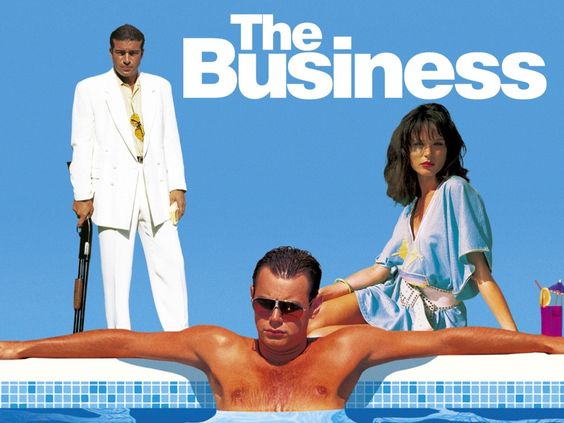
Frankie is sent from London to Spain to make a delivery to Charlie, who likes the kid and shows him the ropes including the use of guns and drugs. Frankie likes the sun, pools and the cute, bikini clad girls and stays in Spain.
The film is narrated by Frankie, a young everyman living in South East London during the Thatcher era of the 1980s specifically 1984, with little hope of ever making anything of himself, yet he dreams of “being somebody” and escaping his lonely, dreary lifestyle. After severely beating his mother’s abusive boyfriend, he becomes a fugitive, and through family connections escapes to the Costa del Sol. His job there is to deliver a bag containing money to “Playboy Charlie”, a suave expat and fugitive who runs his own nightclub. Impressed by Frankie’s honesty in not opening the bag, Charlie takes a liking to Frankie, introduces him to his business associates, including the psychopathic Sammy, and invites him to remain in Spain and work as his driver. Frankie discovers that Charlie and his associates are in fact the “Peckham Four”, wanted for armed robbery back in Britain. However, Frankie decides he prefers the excitement, wealth, status, and luxury that Charlie’s gang offers, as opposed to his previous unremarkable life in London. Frankie therefore joins Charlie in the business of smuggling hashish across the Strait of Gibraltar from Morocco.
Plot
The film then follows the rise-and-fall pattern common to many gangster films, showing first the criminals living the high life as their cannabis trade is booming, and then their downfall as greed and paranoia introduce conflict between them, and eventually split them up. Tensions amid the group are exacerbated by the mutual attraction between Frankie and Sammy’s wife Carly. Charlie and Frankie decide to go into business alone, importing cocaine instead of cannabis through drop-offs from Colombian aeroplanes, but this fails to resolve their problems. Not only do both men become increasingly addicted to the drug itself, but their new smuggling attracts the ire of the local mayor, who had previously been happy to ignore the cannabis trade but warned them not to import cocaine. After discovering that Frankie and Charlie have entered the cocaine trade, the mayor cracks down on their gang and shuts down their businesses. A subsequent assassination attempt on the mayor’s life proves unsuccessful, and leads to the beheading of one of the gang’s affiliates.
Six months later, Frankie and Charlie are homeless thugs, reduced to stealing in order to survive. While organising a disappointing reunion party at Charlie’s old bar, now run by Frankie’s friend Sonny, Frankie meets Carly again and decides to make one last deal. He invites Sammy in on a pick-up, but while both intend to betray the other, Carly had given Sammy a pistol. Sammy tries to shoot Frankie, but this proves unsuccessful as his pistol was handed to him with an empty magazine, unbeknownst to Sammy. Frankie in turn attacks Sammy with a rock; the fight then ends abruptly as Sammy is fatally shot by Spanish Navy patrolmen while Frankie escapes through a sewage pipe and emerges to meet Carly, who was responsible for handing Sammy his unloaded gun. Preparing to leave town with Carly, Frankie discovers that she is plotting against him as well when he finds another pistol in her handbag amongst their money; Frankie knocks her unconscious and drives off triumphantly into the sunset on his own.
The ending reveals that Sonny cleaned up his act and continued to run Charlie’s old bar, which he did successfully, whilst Charlie was reduced to working as a bouncer. The theatrical ending also reveals that “Carly went back to her parents’ house in Penge“, “Sammy went to Hell” and “Frankie went to Hollywood“.
Courtesy of Wikipedia – https://en.wikipedia.org/wiki/The_Business_(film)
Facts for the Lads
The DVD features an alternate ending where Frankie meets Carly at the border. There she promptly tells the border guard where to find drugs in Frankie’s car.
Quotes for the Lads
My old man wrote me a letter from prison once. It said if you don’t want to end up in here, stay away from crime, women and drugs. Trouble is, that don’t leave you much else to do, does it?
While Reservoir Dogs was a stunning debut feature, it was his 1994 film Pulp Fiction that truly transformed Quentin Tarantino into a bonafide global icon. Often cited as the perfect postmodern film, Pulp Fiction revitalised the American filmmaking landscape and influenced the ’90s more than any other cinematic work.
Starring the likes of Samuel L. Jackson, Bruce Willis, John Travolta and Uma Thurman, Pulp Fiction is a sprawling exploration of Los Angeles’ seedy underbelly. Delving deep into a dark world of crime and violence, the film paints a complex portrait of one of the most mythologised cities in the world.
During a recent appearance on the 2 Bears, 1 Cave podcast where he discussed his new TV show, Tarantino was also asked about the initial casting process for Pulp Fiction. The director addressed the internet rumours about his first choices for the iconic roles.
Tarantino said: “On the internet, there’s a thing floating around about my wish list of the cast of Pulp Fiction. I didn’t know exactly who I wanted to play this part or that part, so I wrote a giant list with a ton of names. I wanted to get them all pre-approved, and I didn’t know if it was gonna work out or if I would vibe with the person or if they would even do a good job. I just wanted to get them approved.”
One studio executive – Mike Medavoy – wanted Tarantino to cast Johnny Depp for the role of Pumpkin, which eventually went to Tim Roth. Tarantino asked Medavoy: “Do you think Johnny Depp playing the role of Pumpkin in this movie, which is the opening scene and the closing scene that’s it, do you think that will add that much to the box office? Him playing that role?” According to Tarantino, Medavoy replied: “It won’t add a dime, but it would make me feel better.”