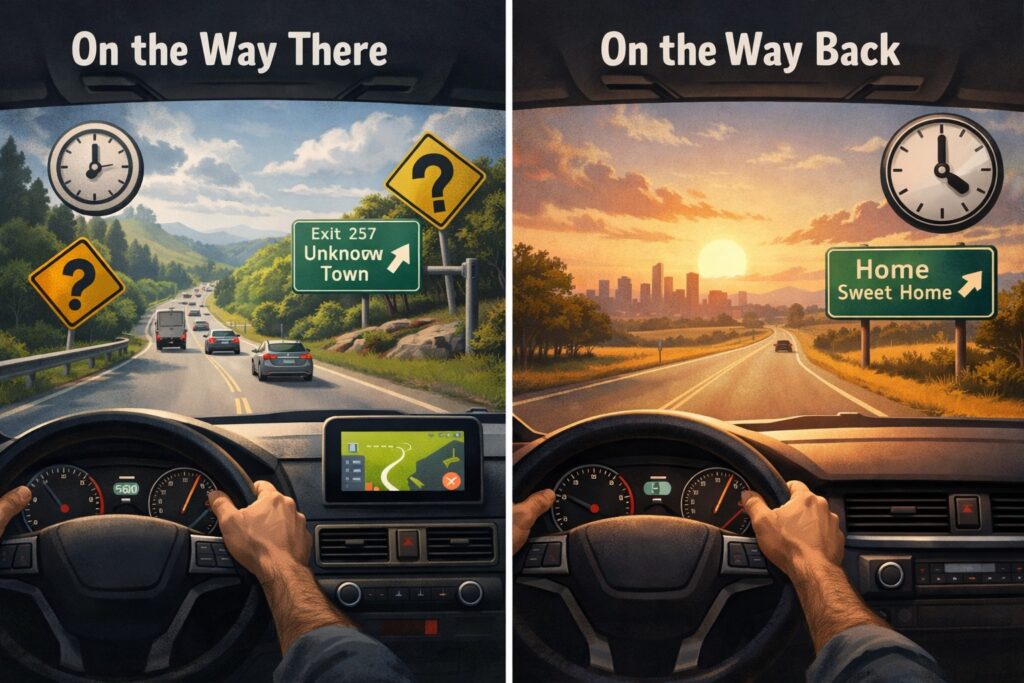
Ever noticed that when you travel a long distance, the journey back always feels quicker than the journey there?

Long road stretching into the distance during a journey, representing the outward trip feeling slower due to unfamiliar surroundings.

It’s not because you were driving faster — it’s because your brain treats the two journeys differently.

On the way there, everything is unfamiliar. New roads, new landmarks, and uncertainty make your brain work harder. You subconsciously check progress more often, which stretches your perception of time.

On the way back, the route is familiar. Your brain switches to autopilot, stores fewer memories, and stops actively tracking the journey. With less attention on the road, time feels like it passes faster.

Same distance. Same journey.

Different perception of time.

The most advertised place on Earth — and I remember none of it

We spend our lives trying to avoid adverts.

We pay extra to remove them, block them, mute them, skip them.

Then we fly thousands of miles to Times Square — the most aggressively advertised place on the planet — and stand there staring at screens.

Here’s the funny part:

I can’t remember a single advert I saw.

Not one brand. Not one product.

The only thing I remember is my wife mentioning Mean Girls — because it was something our daughter watched. That stuck. The million-dollar screens didn’t.

Which says a lot.

Times Square isn’t memorable because of what it’s selling.

It’s memorable because of the people you’re with, the throwaway comments, the shared moments — the stuff advertising can’t buy.

The irony is, the loudest ads in the world end up being background noise…

and the quiet human moments are what stay with you.

Am I the only one who does this?

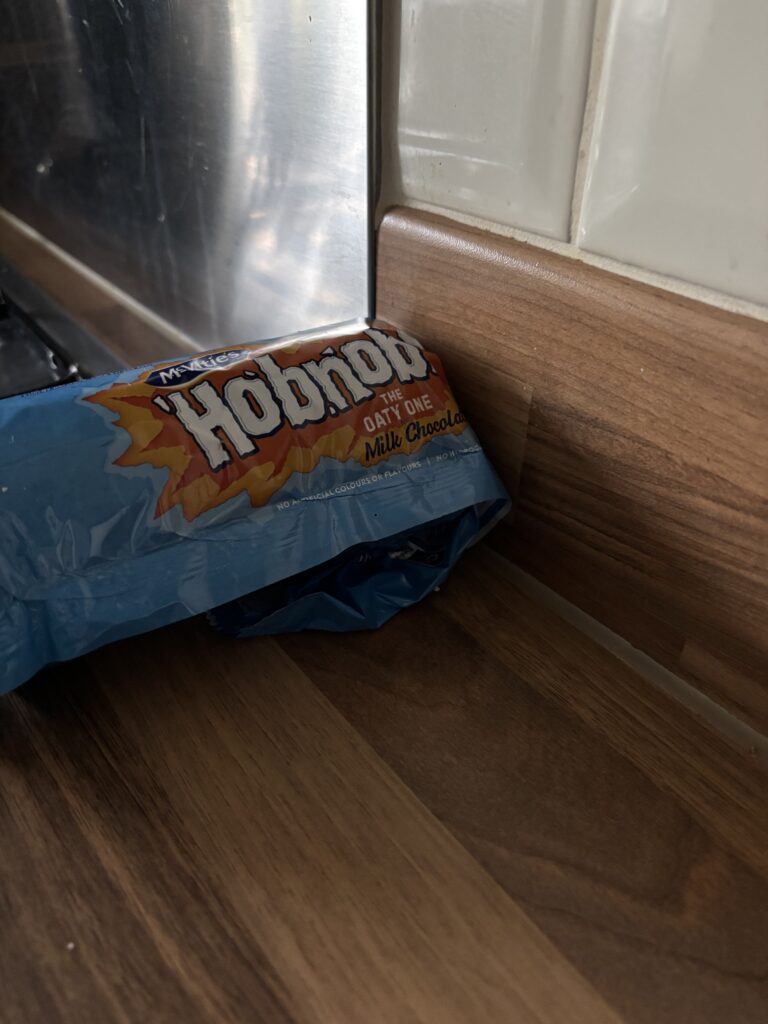
Instead of putting biscuits in a jar,

I just crunch them down inside the packet and push them up against the wall.

I’ve done it with:

  • biscuits
  • cake
  • bread
  • pretty much anything that comes in a packet

It’s not neat.

It’s not elegant.

But it works.

Tell me I’m not the only one who does this.

Am I the only one who gets annoyed by this?

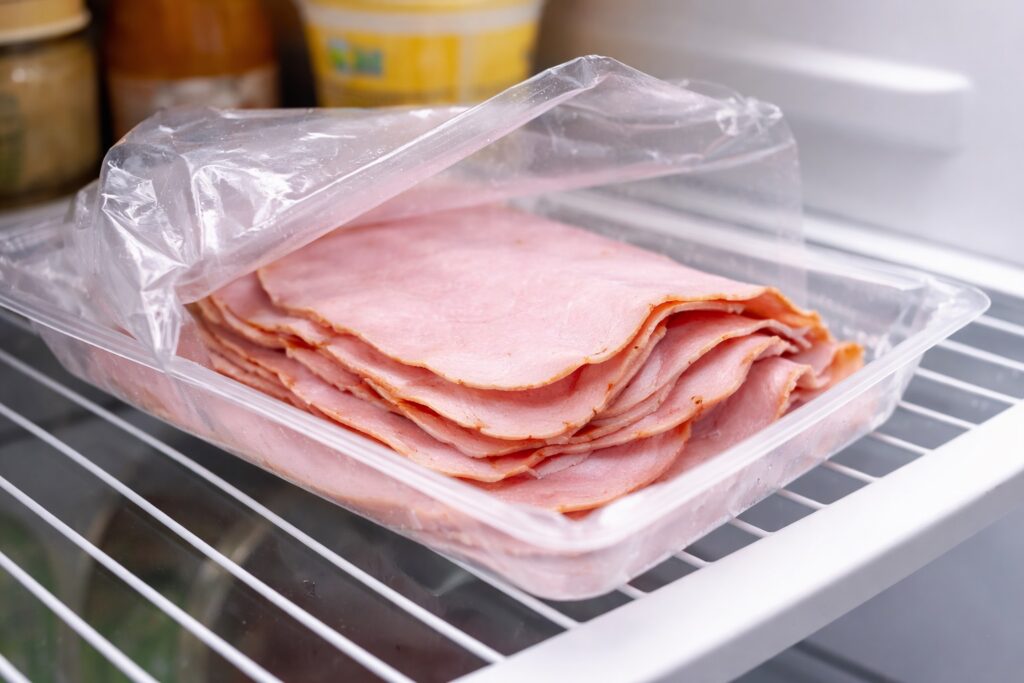
My girlfriend will open a packet of ham, make a sandwich…

and then just put the packet back in the fridge open.

No clip.

No folding.

No attempt at sealing it.

Just straight back in like the fridge is some kind of magical preservation chamber.

In my head, I’m thinking:

  • air gets in
  • it dries out
  • it goes a bit crispy round the edges
  • and suddenly it’s “gone funny” three days earlier than it should have

But apparently, because it’s in the fridge, that’s fine.

I don’t know if this is just my house, or if other people live like this too, but to me that packet is now on borrowed time.

Am I being fussy…

or is leaving opened food exposed in the fridge absolute chaos?

Please tell me I’m not alone here.

The Great Toilet Roll Debate

Forget the whole toilet seat up or down argument for a second.

There’s a far more serious issue dividing households up and down the country…

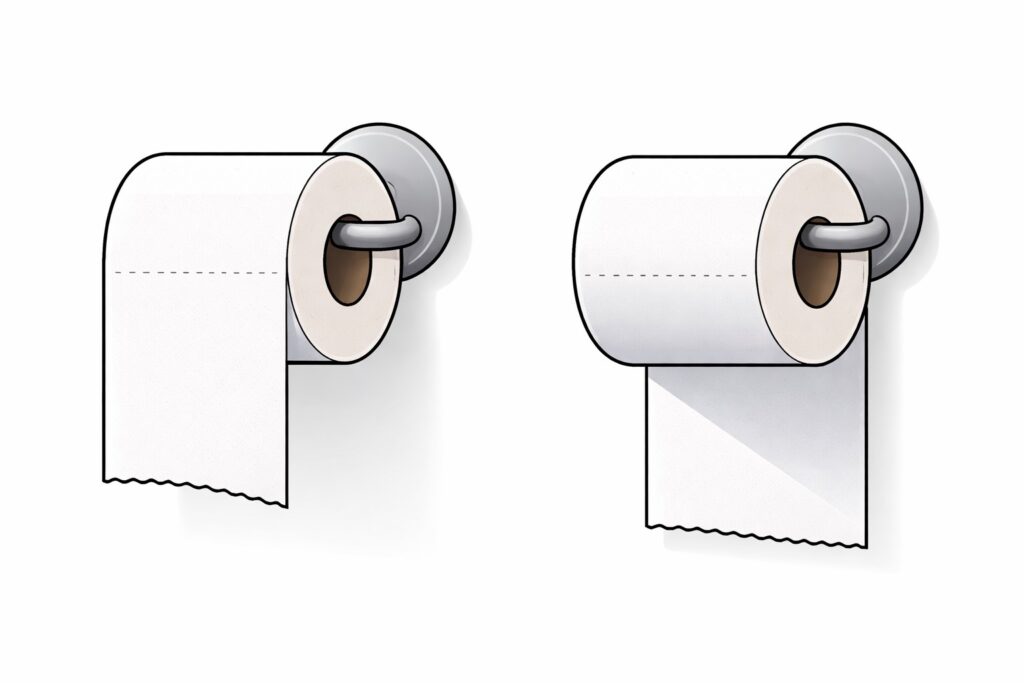
Which way should the toilet roll face?

You’ve got two camps:

Camp 1: 

Flap Away From the Wall

Apparently:

  • it’s “more hygienic”
  • it doesn’t brush the wall
  • it’s the official way (according to someone, somewhere)

Fair enough.

Camp 2: 

Flap Against the Wall

This is where I’m at.

Why?

Because when the flap’s against the wall:

  • you can pull more than one square in one go
  • it doesn’t spin like a fruit machine
  • and if you’re a bit heavy-handed, you don’t end up ripping off one lonely square by mistake

Nothing worse than:

pull → rip → sigh → pull again

Like some sort of survival challenge.

And yes, this has caused actual arguments.

Real ones.

With words like “why do you keep changing it?” and “because your way is stupid” being exchanged.

So let’s settle it properly.

👉 Flap towards the wall

👉 Or flap away from the wall

Never mind what’s “correct”.

Which way do you do it… and why?


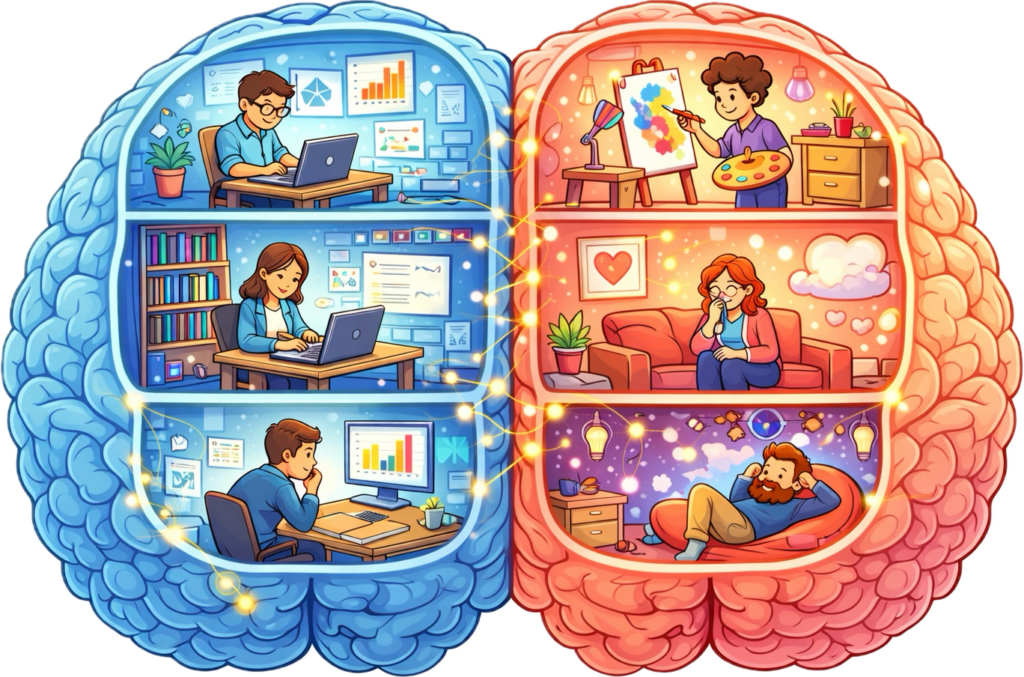
Have You Ever Wondered If There’s Any Truth to the Left Brain (Logic) / Right Brain (Creativity) Idea?

You’ve probably heard this one.

The left side of the brain is logical, analytical, and organised.

The right side is creative, emotional, and imaginative.

So people say things like:

  • “I’m right-brained”
  • “They’re very left-brained”
  • “I’m not creative — I’m logical”

It sounds neat. It sounds believable.

But it’s not really how the brain works.

Where the idea came from

The idea comes from real science — just simplified too far.

The brain does have two hemispheres, and they do specialise slightly. For example:

  • Language is often more dominant on the left
  • Spatial awareness is often stronger on the right

So the split isn’t completely made up.

The problem is what people did next.

They turned tendencies into personality types.


What modern neuroscience says

In reality, almost everything you do uses both sides of your brain at the same time.

  • Creativity uses logic
  • Logic uses imagination
  • Problem-solving uses emotion
  • Planning uses intuition

Even something as simple as telling a joke or fixing a problem involves networks firing across both hemispheres.

There is no such thing as a “right-brained person” or a “left-brained person” in the way people usually mean it.


Why the myth won’t go away

Because it’s comforting.

It gives people an easy label:

  • “I’m not creative”
  • “I’m not logical”
  • “That’s just not how my brain works”

But those labels are shortcuts — not truths.

Most differences between people come from:

  • how their brain networks connect
  • experience and practice
  • personality
  • environment

Not from one half of the brain doing all the work.


So why do some people feel more creative or more logical?

Because people tend to:

  • practise what they’re good at
  • avoid what feels uncomfortable
  • build habits around strengths

Over time, that creates a style of thinking, not a hard-wired limitation.

Your brain adapts to what you ask it to do.


The bottom line

The left brain / right brain idea isn’t completely false — but it’s wildly oversimplified.

You don’t have a creative side and a logical side fighting for control.

You have one brain, constantly using different parts together.

And most people are far more capable than the labels they’ve been given.

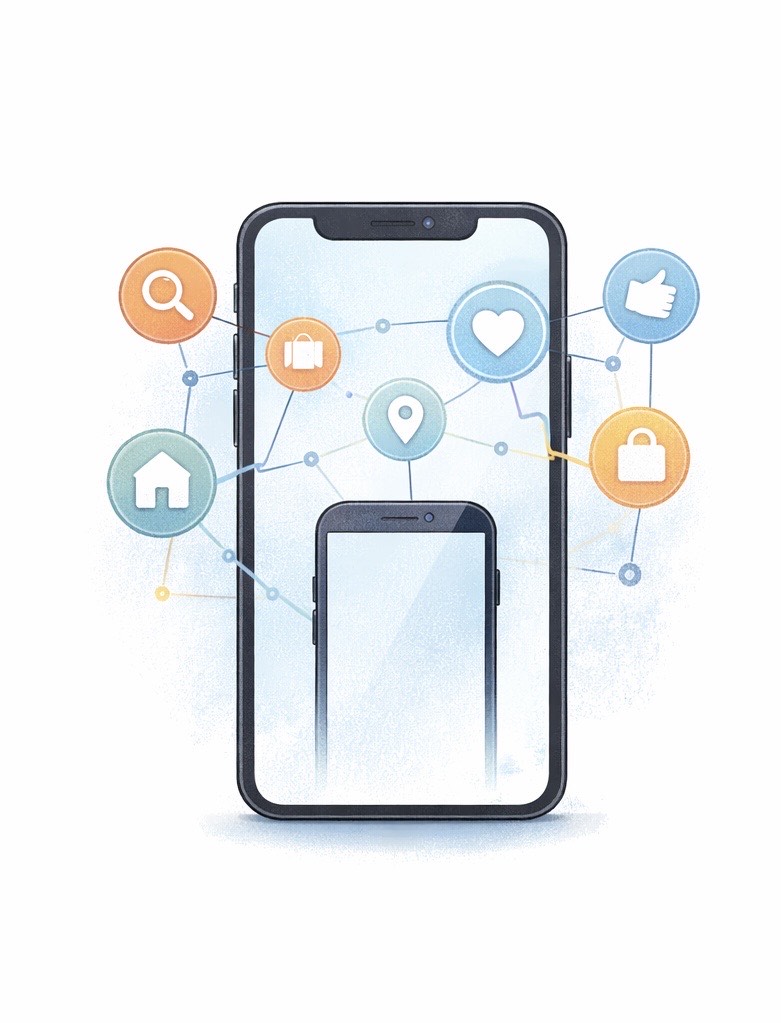
Have You Ever Wondered Why Ads Show Up After You Talk About Something?

You’re chatting with someone about something completely random — trainers, holidays, a new kettle — and later that same day, an advert for it pops up on your phone.

At that point, almost everyone thinks the same thing:

Is my phone listening to me?

It feels intrusive. A bit creepy. And not entirely unbelievable.


At first glance, it really does seem like your phone must be picking up your conversations. The timing feels too perfect to be a coincidence. You mention something out loud, and suddenly it’s staring back at you on a screen.

But here’s the less dramatic — and slightly more unsettling — explanation.

Most of the time, your phone doesn’t need to listen to you.


Long before you ever said anything out loud, your behaviour had already been leaving clues.

Apps and websites track what you search for, what you click on, what you pause on, what you like, where you go, and even what other people around you are interested in. All of that data builds a surprisingly accurate picture of what you’re likely to think about next.

So when you finally do talk about something, the advert doesn’t feel predictive — it feels reactive.

In reality, the prediction often came first. The conversation just makes you notice it.


This is where it starts to feel uncomfortable.

Your phone isn’t “listening” in the way people imagine, but it is extremely good at connecting dots. It knows your habits, your routines, your interests, and your patterns — and those patterns are far more predictable than most of us like to admit.


To be clear, phones do have microphones, and apps do request permission to use them. There have also been real cases of companies abusing access they shouldn’t have had. So people aren’t foolish for being suspicious.

But in most everyday situations, what’s really happening isn’t spying — it’s probability.

Your phone isn’t secretly listening to your conversations.

It’s just very good at guessing what you’re going to care about next.

And depending on how you look at it, that might be even stranger.

Another one of those modern moments where the technology isn’t quite as clever — or as innocent — as we’d like to believe.

The Definition of a Lad

Britannica Dictionary definition of LAD

[count] informal

chiefly British : a boy or young man

  • a charming young lad
  • Life was hard when I was a lad.
  • Well, lad, I hope you won’t make the same mistake again!
  • He’s a good lad at heart.

— compare lass

British : a man with whom you are friendly : fellowchap

  • They can’t treat us like that, can they, lads?!
  • He was out drinking with the lads [=(USthe guys, the boys] at the pub.

◊ In British English, a man who is a bit of a lad does things that are considered a bit wild, such as getting drunk and having sexual relations with many women.


  • He was a bit of a lad until he settled down.