We pay extra to remove them, block them, mute them, skip them.
Then we fly thousands of miles to Times Square — the most aggressively advertised place on the planet — and stand there staring at screens.
Here’s the funny part:
I can’t remember a single advert I saw.
Not one brand. Not one product.
The only thing I remember is my wife mentioning Mean Girls — because it was something our daughter watched. That stuck. The million-dollar screens didn’t.
Which says a lot.
Times Square isn’t memorable because of what it’s selling.
It’s memorable because of the people you’re with, the throwaway comments, the shared moments — the stuff advertising can’t buy.
The irony is, the loudest ads in the world end up being background noise…
and the quiet human moments are what stay with you.
You’re chatting with someone about something completely random — trainers, holidays, a new kettle — and later that same day, an advert for it pops up on your phone.
At that point, almost everyone thinks the same thing:
Is my phone listening to me?
It feels intrusive. A bit creepy. And not entirely unbelievable.
At first glance, it really does seem like your phone must be picking up your conversations. The timing feels too perfect to be a coincidence. You mention something out loud, and suddenly it’s staring back at you on a screen.
But here’s the less dramatic — and slightly more unsettling — explanation.
Most of the time, your phone doesn’t need to listen to you.
Long before you ever said anything out loud, your behaviour had already been leaving clues.
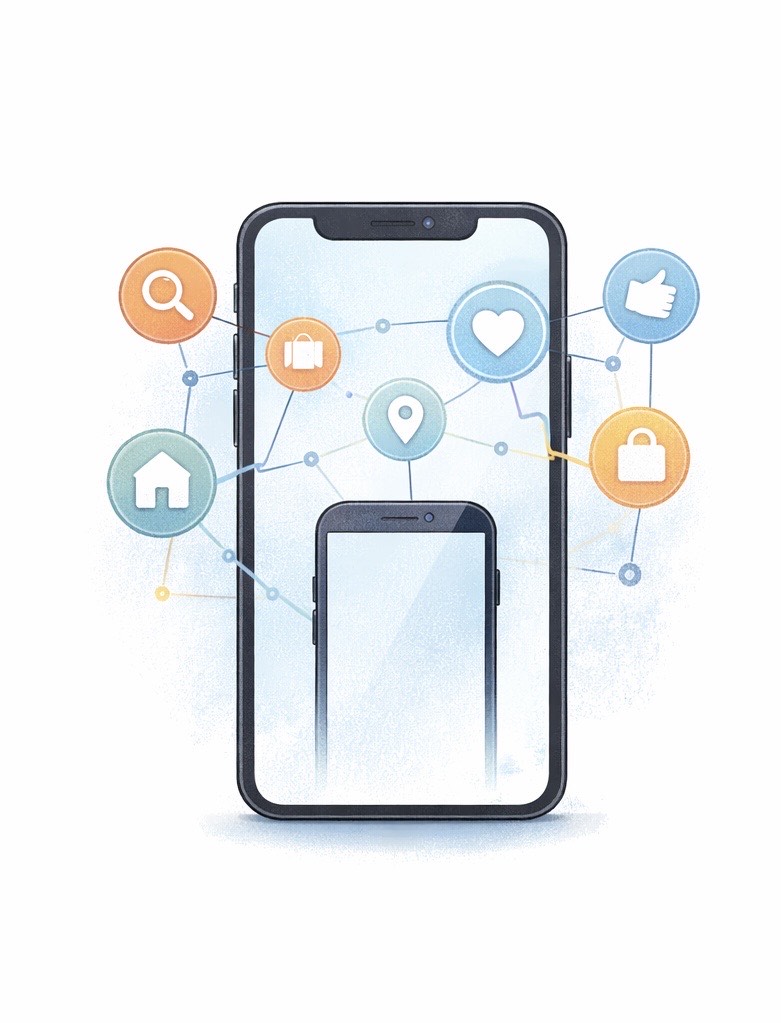
Apps and websites track what you search for, what you click on, what you pause on, what you like, where you go, and even what other people around you are interested in. All of that data builds a surprisingly accurate picture of what you’re likely to think about next.
So when you finally do talk about something, the advert doesn’t feel predictive — it feels reactive.
In reality, the prediction often came first. The conversation just makes you notice it.
This is where it starts to feel uncomfortable.
Your phone isn’t “listening” in the way people imagine, but it is extremely good at connecting dots. It knows your habits, your routines, your interests, and your patterns — and those patterns are far more predictable than most of us like to admit.
To be clear, phones do have microphones, and apps do request permission to use them. There have also been real cases of companies abusing access they shouldn’t have had. So people aren’t foolish for being suspicious.
But in most everyday situations, what’s really happening isn’t spying — it’s probability.
Your phone isn’t secretly listening to your conversations.
It’s just very good at guessing what you’re going to care about next.
And depending on how you look at it, that might be even stranger.
Another one of those modern moments where the technology isn’t quite as clever — or as innocent — as we’d like to believe.