How to Download and Set a Wallpaper on Your Phone (Properly)

Making tech simple

What is a wallpaper, anyway?

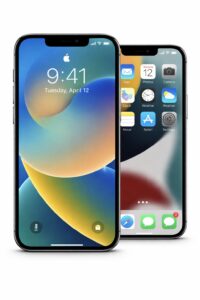
A wallpaper is the background image on your phone.

It’s the picture you see:

  • on your lock screen (when your phone is locked)
  • and/or on your home screen (behind your apps)

Most phones come with boring default wallpapers.

The good news is: you can change them — to anything you like.

That means:

  • your phone looks better
  • it feels more “yours”
  • and it’s one of the easiest customisations you can make

No tech knowledge required.


Why bother changing your wallpaper?

A good wallpaper can:

  • make your phone look cleaner
  • make text easier to read
  • show off something you like (art, humour, attitude)
  • just make you smile when you unlock your phone

There’s no downside.

If you don’t like it, you can change it again in 10 seconds.

Step 1: Download the wallpaper (very simply)

When you see a wallpaper image on this site:

On iPhone

  1. Tap the image
  2. Tap Save to Photos

That’s it.

The image is now stored in your Photos app on your phone.


On Android

  1. Tap and hold the image
  2. Tap Download image or Save image

That’s it.

The image is now stored in your Gallery or Photos app.

You can now use it as your wallpaper.


Step 2: Set it as your wallpaper (iPhone)

  1. Open the Photos app
  2. Find the wallpaper you just saved
  3. Tap the share icon (square with an arrow)
  4. Tap Use as Wallpaper
  5. Choose:
    • Lock Screen
    • Home Screen
    • or Both
  6. Adjust it if needed, then set

Done.


Step 3: Set it as your wallpaper (Android)

  1. Open your Gallery or Photos app
  2. Open the wallpaper image
  3. Tap the three dots or menu
  4. Tap Set as wallpaper
  5. Choose where you want it:
    • Lock screen
    • Home screen
    • or Both

Done.


Don’t worry if you mess it up

You can’t break anything by changing your wallpaper.

If it looks wrong:

  • zoom it
  • move it
  • or pick a different one

You can always go back to your old wallpaper.


Our first wallpapers

Below is our first free to download phone wallpapers

Tap the image you want. Save it to your phone. Try it as your wallpaper.

If you like it — great.

If not — more are coming.

This is just the start.

Enjoy!

What Was Happening Back in 

1984

🖥️ Computers Were Finally Entering Homes

By 1984, computers were no longer just something you saw in offices or on the news.

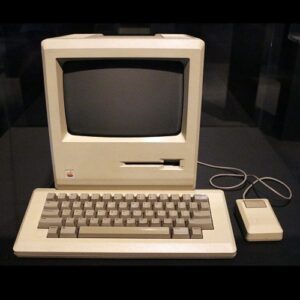
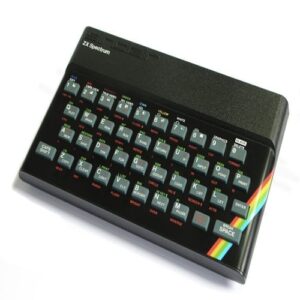
Machines like the Apple Macintosh and the ZX Spectrum were making computers feel personal — something you could actually sit in front of at home.

In the UK especially, the Spectrum became part of everyday life. Games loaded from cassette tapes, screens flashed with colour blocks, and kids learned patience the hard way waiting for something to load.


🎮 Games and Technology Were Colliding

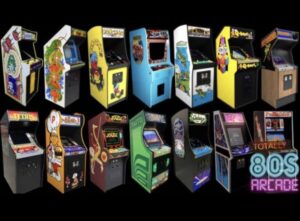
Home gaming was exploding. Arcades were still busy, but more and more people were playing at home.

The graphics were basic, the sound was rough, but the ideas were huge.

This was the era where games felt new, experimental, and slightly unpredictable — sometimes they worked, sometimes they crashed, and everyone accepted that as normal.


🎶 Music Was Loud, Visual, and Everywhere

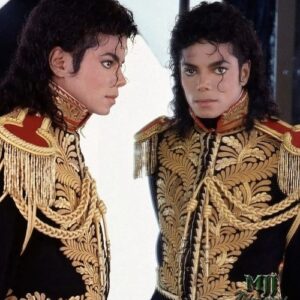
Music in 1984 wasn’t just something you listened to — it was something you watched.

Music videos were becoming a big deal, synth sounds were everywhere, and pop culture felt bold and futuristic.

This was a time when artists didn’t just release songs — they released images, styles, and attitudes.


📼 Everyday Life Looked Very Different

Evenings were simple.

Video rental shops, CRT televisions, and shelves full of VHS tapes. You picked what was left, not what you wanted, and somehow it was still exciting.

No streaming, no instant access — just whatever was available and a bit of imagination.


🧠 Looking Back

1984 sits in that interesting space where things were clearly changing, but nobody quite knew where they were heading.

Digital was arriving, but analogue still ruled. Technology was improving fast, but still felt rough around the edges.

For a lot of people, this was the backdrop to growing up — without realising they were watching the foundations of modern life being laid.

Sopranos Wallpaper

Free Sopranos Wallpaper 

The Sopranos isn’t just a TV show — it’s a mood.

If you know, you know.

The silences.

The stares.

The weight of every decision.

I’ve put together a free Sopranos-inspired wallpaper for anyone who appreciates proper TV and doesn’t need it spelling out.

No quotes.

No cringe.

Just clean, dark, iconic energy — perfect for your phone or desktop.

Download it. Use it. Done.

No sign-ups. No nonsense.

Just a quiet nod to one of the greatest shows ever made.

👉 Free download below

If you like this sort of thing, there’s more coming.

Films. TV. Proper lad culture. No fluff.

Tap any image to open it full size, then save it to your phone. Free to download and use.

Making the Bed: An Impossible Standard

man confused by too many cushions while making the bed

There’s making the bed…

and then there’s whatever it is your missus expects.

You get up, smooth the duvet out a bit, pillows roughly where pillows live, job done. In your head, the bed is now made.

Apparently not.

Apparently the bed is supposed to look like:

  • a hotel showroom
  • with cushions you didn’t sleep on
  • arranged in some unspoken order
  • that you were never taught

Scatter cushions appear from nowhere.

Extra pillows get involved.

Suddenly you’re expected to create some kind of soft-furnishing masterpiece before you’ve even had a coffee.

And if you get it wrong?

You don’t get told how to fix it — it just quietly gets re-done later, with that look.

It’s not that lads can’t make the bed.

It’s that we thought the goal was flat and usable, not art installation.

Am I the only one who gets annoyed by this?

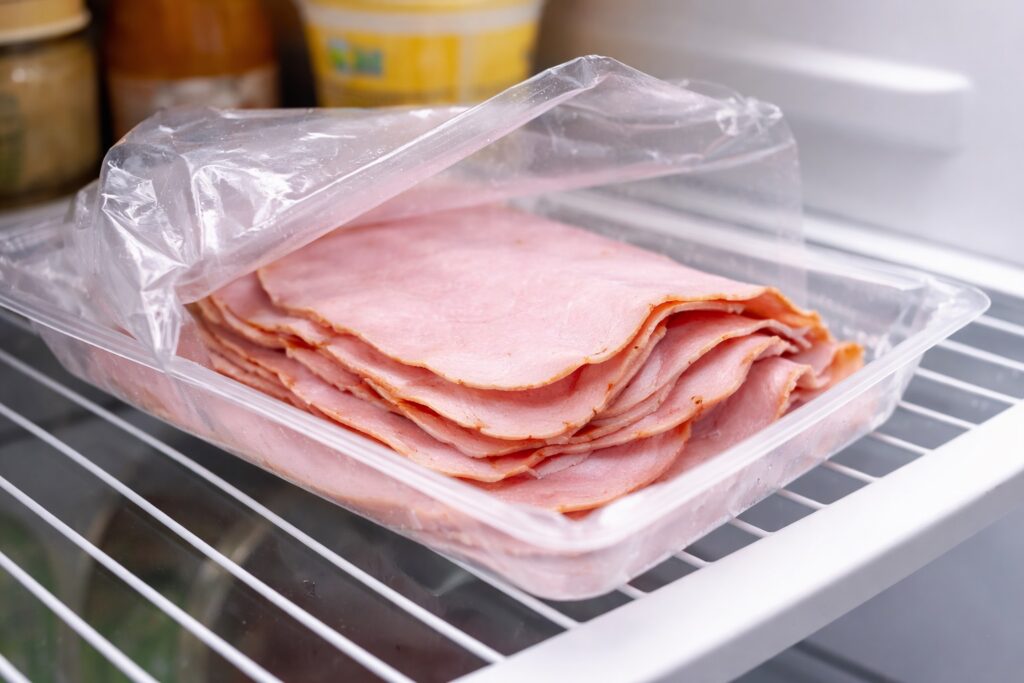
My girlfriend will open a packet of ham, make a sandwich…

and then just put the packet back in the fridge open.

No clip.

No folding.

No attempt at sealing it.

Just straight back in like the fridge is some kind of magical preservation chamber.

In my head, I’m thinking:

  • air gets in
  • it dries out
  • it goes a bit crispy round the edges
  • and suddenly it’s “gone funny” three days earlier than it should have

But apparently, because it’s in the fridge, that’s fine.

I don’t know if this is just my house, or if other people live like this too, but to me that packet is now on borrowed time.

Am I being fussy…

or is leaving opened food exposed in the fridge absolute chaos?

Please tell me I’m not alone here.

The Great Toilet Roll Debate

Forget the whole toilet seat up or down argument for a second.

There’s a far more serious issue dividing households up and down the country…

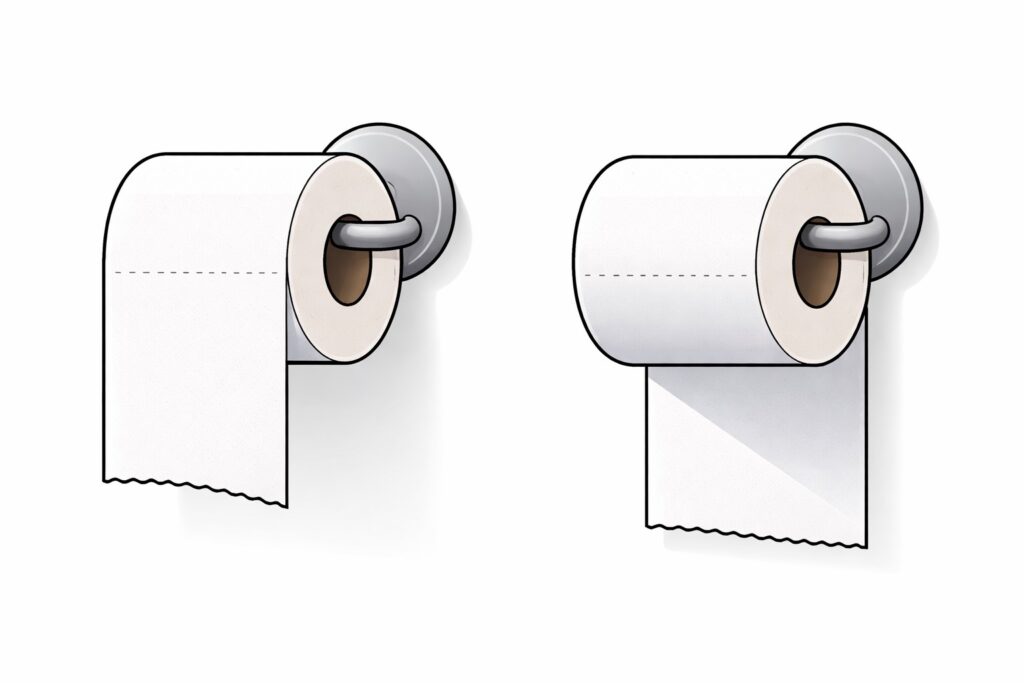
Which way should the toilet roll face?

You’ve got two camps:

Camp 1: 

Flap Away From the Wall

Apparently:

  • it’s “more hygienic”
  • it doesn’t brush the wall
  • it’s the official way (according to someone, somewhere)

Fair enough.

Camp 2: 

Flap Against the Wall

This is where I’m at.

Why?

Because when the flap’s against the wall:

  • you can pull more than one square in one go
  • it doesn’t spin like a fruit machine
  • and if you’re a bit heavy-handed, you don’t end up ripping off one lonely square by mistake

Nothing worse than:

pull → rip → sigh → pull again

Like some sort of survival challenge.

And yes, this has caused actual arguments.

Real ones.

With words like “why do you keep changing it?” and “because your way is stupid” being exchanged.

So let’s settle it properly.

👉 Flap towards the wall

👉 Or flap away from the wall

Never mind what’s “correct”.

Which way do you do it… and why?


The Sopranos Quiz

How Made Are You? The Sopranos Quiz

What’s the name of Tony’s strip club?

Who is Tony’s therapist?

What’s Paulie’s surname?

What’s Christopher’s surname?

What’s the pork store called?

Who is Carmela’s priest mate she talks to a lot?

The ducks in Tony’s pool mainly symbolise…

What’s the name of Adriana’s club?

What’s Silvio’s vibe in the crew?

Finish this: “Just when I thought I was out…”

Your Dog Isn’t Stupid — the TV Just Lies Better Than the Mirror

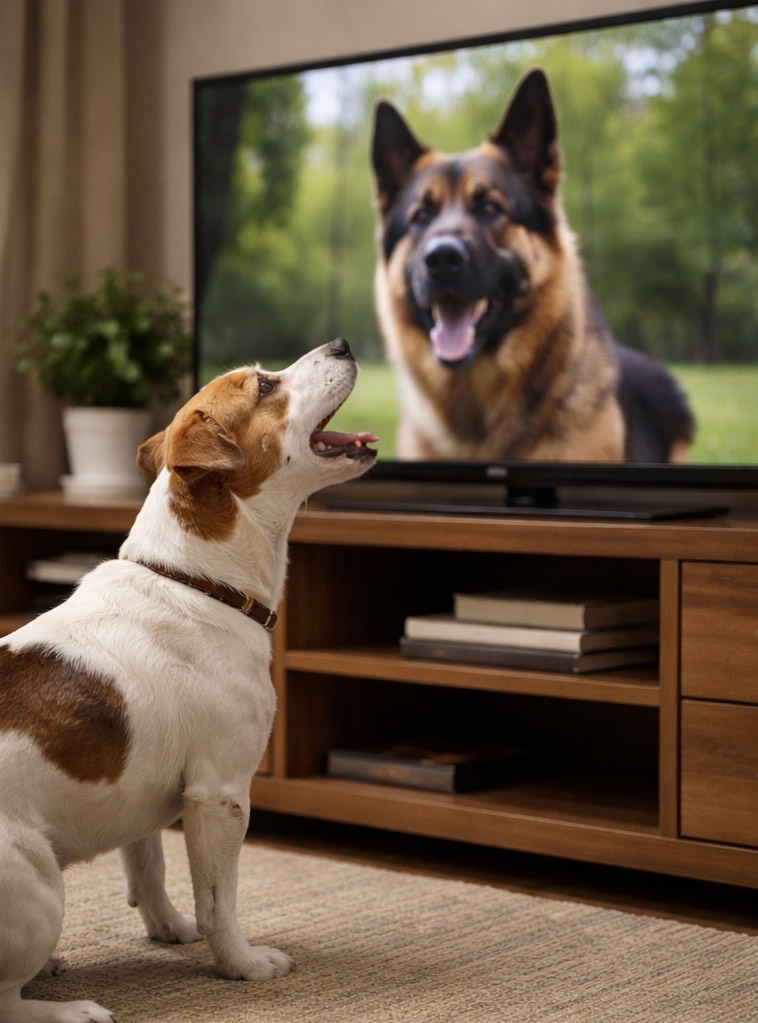
Ever noticed how your dog goes absolutely ballistic when a dog appears on the telly — yet walks straight past a mirror like it doesn’t exist?

You’d think it would be the other way around.

After all, one is literally them.

But here’s the truth:

your dog isn’t confused — he’s making a perfectly logical decision.


Dogs don’t recognise themselves (and that’s normal)

Humans recognise themselves in mirrors. Dogs don’t.

A dog seeing a mirror doesn’t think:

“Oh, that’s me.”

He thinks:

“That looks like a dog… but it smells like nothing, sounds like nothing, and behaves like nothing.”

Dogs rely far more on smell and sound than sight. When those are missing, the whole thing collapses.

So most adult dogs do the sensible thing:

  • They test the mirror once or twice
  • Get no useful information
  • Ignore it forever

That’s not stupidity. That’s efficiency.


Why the TV sets them off

Now compare that to the television.

A dog on TV:

  • Moves independently
  • Makes noise
  • Appears and disappears
  • Doesn’t copy your dog’s movements

From a dog’s point of view, that’s close enough to real life to matter.

It doesn’t need to be perfect.

It just needs movement + sound.

That’s why:

  • Door noises trigger barking
  • Footsteps get attention
  • A dog barking on TV = instant alert mode

The TV behaves just enough like life to trigger a reaction.


Mirrors are too perfect to be believable

Here’s the irony.

A mirror is actually less convincing to a dog than a screen.

The reflection:

  • Copies every movement instantly
  • Never acts on its own
  • Never makes a sound
  • Never approaches

That’s not how animals behave.

So the dog brain runs a quick checklist:

  • Threat? ❌
  • Useful information? ❌
  • Worth energy? ❌

Conclusion:

“Ignore it.”

And he does.


Dogs don’t think “real vs fake”

This is the bit humans get wrong.

Dogs don’t analyse reality like we do.

They think in simple terms:

  • Relevant or irrelevant
  • Threat or no threat

TV dogs = potentially relevant

Mirror dogs = complete waste of effort


The takeaway

Your dog isn’t stupid.

The TV just lies better than the mirror.

And your dog, being a dog, reacts accordingly.

Have You Ever Wondered If There’s Any Truth to the Left Brain (Logic) / Right Brain (Creativity) Idea?

You’ve probably heard this one.

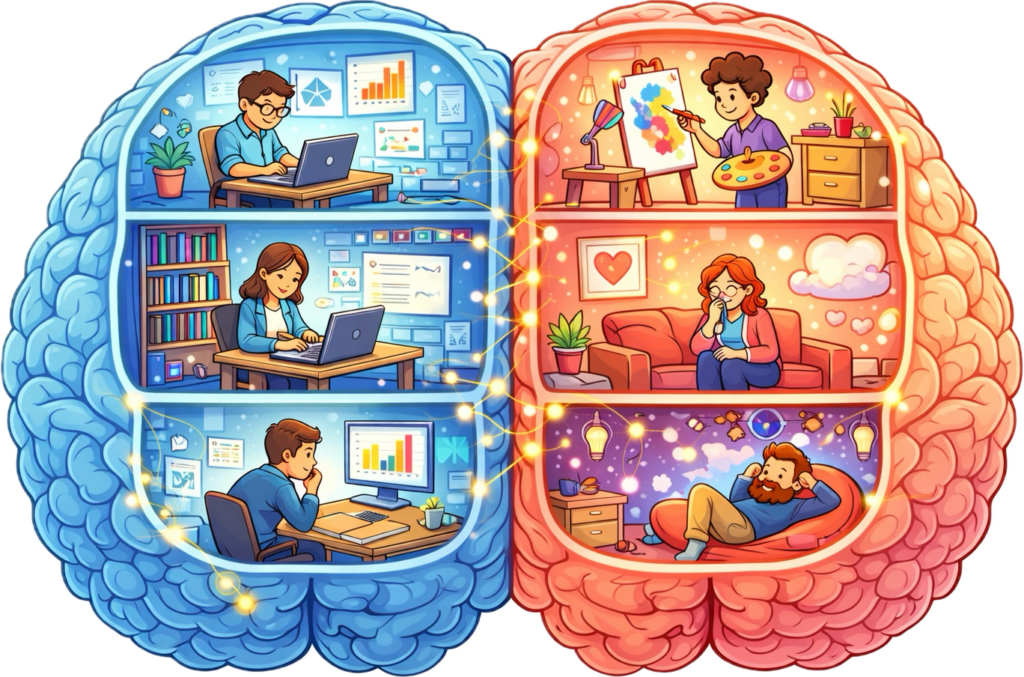
The left side of the brain is logical, analytical, and organised.

The right side is creative, emotional, and imaginative.

So people say things like:

  • “I’m right-brained”
  • “They’re very left-brained”
  • “I’m not creative — I’m logical”

It sounds neat. It sounds believable.

But it’s not really how the brain works.

Where the idea came from

The idea comes from real science — just simplified too far.

The brain does have two hemispheres, and they do specialise slightly. For example:

  • Language is often more dominant on the left
  • Spatial awareness is often stronger on the right

So the split isn’t completely made up.

The problem is what people did next.

They turned tendencies into personality types.


What modern neuroscience says

In reality, almost everything you do uses both sides of your brain at the same time.

  • Creativity uses logic
  • Logic uses imagination
  • Problem-solving uses emotion
  • Planning uses intuition

Even something as simple as telling a joke or fixing a problem involves networks firing across both hemispheres.

There is no such thing as a “right-brained person” or a “left-brained person” in the way people usually mean it.


Why the myth won’t go away

Because it’s comforting.

It gives people an easy label:

  • “I’m not creative”
  • “I’m not logical”
  • “That’s just not how my brain works”

But those labels are shortcuts — not truths.

Most differences between people come from:

  • how their brain networks connect
  • experience and practice
  • personality
  • environment

Not from one half of the brain doing all the work.


So why do some people feel more creative or more logical?

Because people tend to:

  • practise what they’re good at
  • avoid what feels uncomfortable
  • build habits around strengths

Over time, that creates a style of thinking, not a hard-wired limitation.

Your brain adapts to what you ask it to do.


The bottom line

The left brain / right brain idea isn’t completely false — but it’s wildly oversimplified.

You don’t have a creative side and a logical side fighting for control.

You have one brain, constantly using different parts together.

And most people are far more capable than the labels they’ve been given.

Pablo Escobar – Power, Paradox, and Collapse

The short version

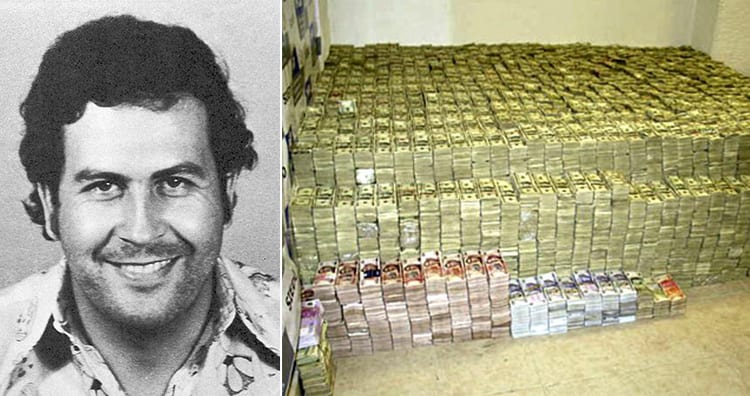
Pablo Escobar rose from small-time crime in Medellín to become the most powerful drug trafficker in history. At his peak, he controlled a vast cocaine network, accumulated wealth on an almost unmanageable scale, and openly challenged the Colombian state. His life ended in 1993 when he was shot dead on a rooftop while attempting to evade capture.

What followed his death was not triumph or legacy, but fragmentation, fear, and lasting damage.


Early life and beginnings

Born in 1949 in Rionegro, Colombia, and raised in Medellín, Pablo Escobar came from modest circumstances. His early criminal activity had little to do with drugs — forged documents, small-scale smuggling, and car theft were his entry points.

What distinguished Escobar early on wasn’t strategy or sophistication, but a willingness to escalate when others hesitated. Violence wasn’t a last resort — it was a tool.

By the late 1970s, as cocaine demand surged in the United States, Escobar positioned himself at the centre of a growing trade.


The Medellín Cartel and unimaginable wealth

Escobar became the public face of the Medellín Cartel, which at its height controlled a majority share of the global cocaine market.

The scale of money involved defied normal logic. Cash was stored in warehouses, buried underground, or hidden in walls. Large sums were routinely lost to mould, fire, and rodents.

One often-reported detail — verified by multiple sources — is that Escobar allegedly spent around £32,000 per month on elastic bands just to bundle cash. This wasn’t excess for show; it was necessity created by volume.

At this level, wealth stopped being about lifestyle and became a logistical problem.


Power, fear, and “plata o plomo”

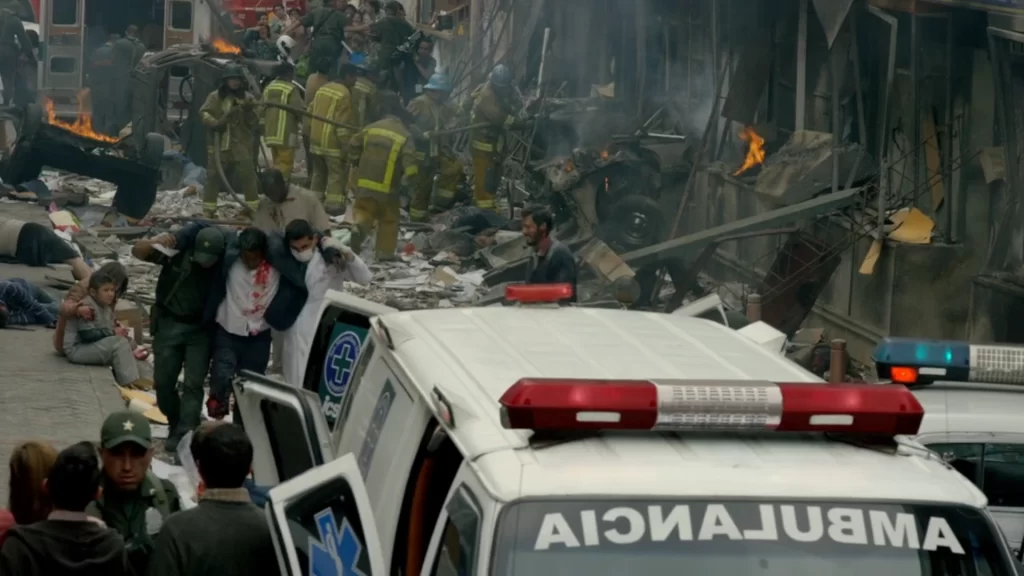
On January 30, 1993, Bogotá was bombed by the Medellin Cartel on the order of Pablo Escobar

Escobar’s influence relied on a brutal simplicity: plata o plomo — silver or lead.

Officials were bribed or killed. Judges, police officers, journalists, politicians — many complied, many didn’t survive. Car bombings, assassinations, and public attacks became part of daily life in Colombia during the height of his power.

This wasn’t hidden criminality. It was open conflict.


Public image and contradiction

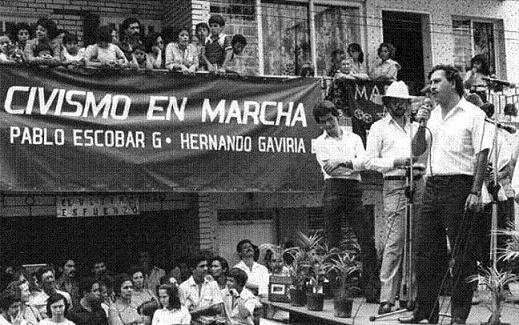
Despite his violence, Escobar cultivated an image as a benefactor in poor areas of Medellín. He funded housing projects, football pitches, and community initiatives.

To some locals, he was seen as a provider. To the state, he was a terrorist. Both views existed simultaneously — and that contradiction is central to understanding why his story still resonates.

These gestures did not offset the damage he caused, but they complicated how he was perceived.


Pressure, isolation, and decline

As Colombian and US authorities intensified efforts against the cartel, Escobar’s position weakened.

He was eventually imprisoned — in a facility built largely to his own specifications. When that arrangement collapsed, he escaped, triggering one of the largest manhunts in modern history.

Former allies turned away. Protection eroded. Surveillance tightened. The network that once shielded him became a liability.

Power built on fear proved fragile once the fear shifted direction.


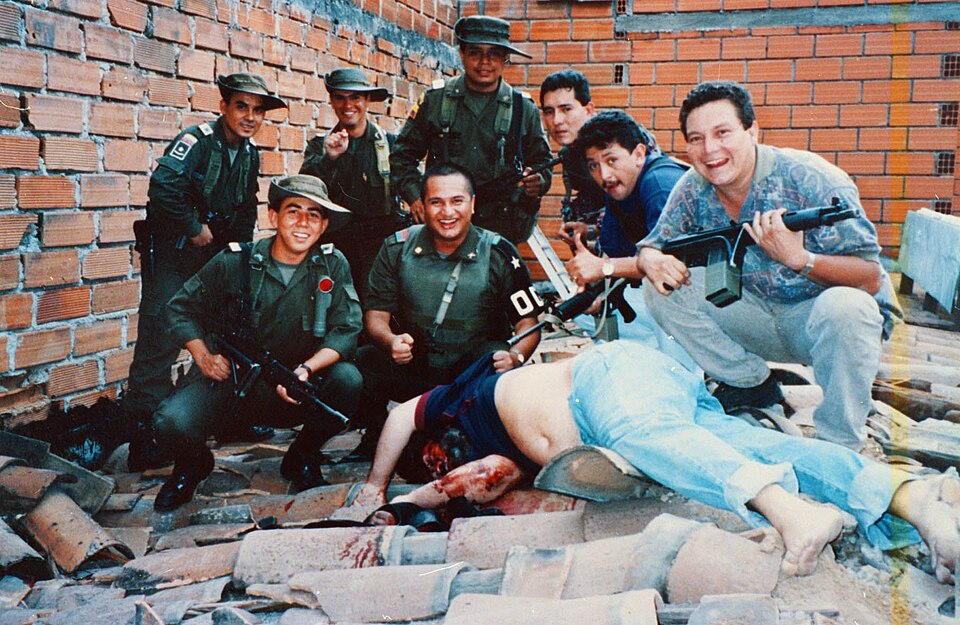
Death on the rooftop

In December 1993, Escobar was located in Medellín.

Attempting to flee across rooftops, he was shot and killed during the escape. He was 44 years old.

There was no negotiation, no exile, no quiet disappearance. The end came suddenly, publicly, and without ceremony.


Aftermath and reality

Escobar’s death did not end the drug trade, but it did end his myth.

His organisation fractured. Violence continued. Colombia was left to deal with the long-term consequences of years of corruption, trauma, and instability.

For all the money, influence, and notoriety, the outcome was bleak: fear, loss, and a life that collapsed under its own weight.


Why his story still matters

Pablo Escobar’s story is often retold not because it is admirable, but because it is extreme.

It shows what happens when power, money, and violence reinforce each other without limits — and how quickly that structure can implode.

Strip away the myth, and what remains isn’t a kingpin, but a warning.